


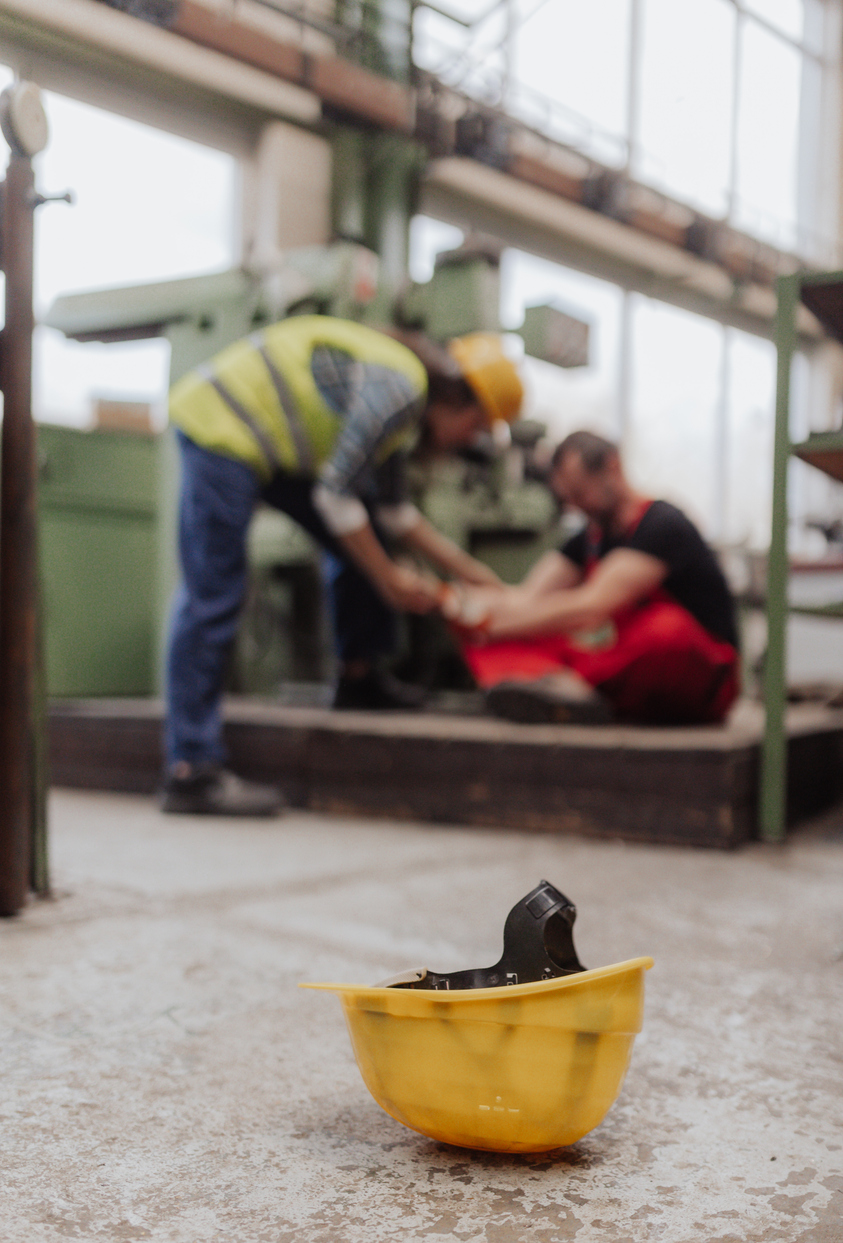







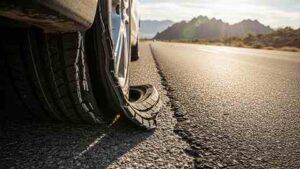
A tire is the only part of a vehicle that touches the road. When it fails at highway speed, the consequences are catastrophic. Tread peels off, the vehicle pulls violently to one side, the driver loses steering and braking authority, and the result is often a rollover, a multi-vehicle pileup, or a fatal crash. In a large share of these cases, the driver did everything right. The tire itself was defective.
At Shook & Stone, we represent injured Nevadans and visitors who were hurt because a tire manufacturer or seller put a defective product on the road. Under Nevada strict product liability law, the manufacturer is responsible for the harm a defective tire causes, even if the company was not negligent. We hold tire makers, distributors, and tire shops accountable, and we recover the full value of our clients’ losses.
How Defective Tires Cause Crashes
Tire failure does not happen at random. The vast majority of catastrophic tire failures fall into one of a handful of well-documented defect categories.
Tread Separation
The tread is bonded to the tire carcass through layers of steel belts and rubber adhesive. When that bond fails, the tread can peel away from the tire while the vehicle is moving. The tire instantly becomes unbalanced, the vehicle pulls hard, and on SUVs, pickups, and UTVs the result is often a rollover. Tread separation is the single most common defect in modern tire litigation, and it is almost always traceable to a manufacturing or design flaw.
Sidewall Blowouts
A sidewall blowout is the sudden rupture of the tire wall. The tire deflates instantly, the vehicle drops, and steering becomes nearly impossible. Sidewall failures often trace back to manufacturing defects such as contamination during curing, misaligned plies, or a weak rubber compound batch.
Bead Failures
The bead is the inner edge of the tire that seats against the wheel. A defective bead can pop loose, dropping the tire off the rim and causing instant loss of control. Bead failures are less common than tread separations, but they are equally dangerous and almost always indicate a defect.
Belt Edge Separation
Inside the tread, two or more steel belts are layered to give the tire stability. When the belt edges pull apart, drivers usually feel a vibration first. If the defect goes undetected, the tire can fail catastrophically without warning, often during a routine highway drive. The 2025 Firestone Destination LE3 recall was a textbook belt edge insert failure case.
Defective Tire Repair
Plug-only repairs and improperly placed patches violate industry safety standards. When a tire shop sells a vehicle owner an unsafe repair instead of a replacement, the shop and its parent company can be held liable for the resulting crash.

The Las Vegas Desert Heat Factor
Tire defects are especially dangerous in southern Nevada. Summer surface temperatures on I-15, US-95, and SR-160 routinely exceed 140 degrees, and ambient air temperatures sit above 110 degrees for weeks at a time. Heat is the enemy of every component inside a tire.
Sustained high temperatures break down the rubber compounds that hold steel belts to the tread. They weaken the adhesion in the tire body. They cause internal pressure to spike, and they make underinflation deadly because an underinflated tire flexes more, which generates even more heat. A tire that may have lasted 60,000 miles in a temperate climate can fail at 30,000 miles on a Las Vegas highway.
That climate reality matters for two reasons. First, it explains why Nevada sees a disproportionate share of catastrophic tire failures, including blowout pileups on the I-15 corridor between Las Vegas and the California border. Second, it eliminates one of the manufacturers’ favorite defenses. A tire is supposed to be designed for the environment it will be used in. If a tire cannot survive normal Las Vegas summer driving, that is a design defect, not a user problem.

Notable Tire Recalls
Tire manufacturers issue recalls when defects become impossible to ignore. The recall does not, however, protect the manufacturer from liability for the people already injured. Recent and historic recalls Shook & Stone watches, and pursues claims under, include the following.
2025 and 2026 Recalls
- Toyo and Nitto, December 2025. Roughly 36,919 tires recalled because contamination during production reduced belt adhesion and caused tread separation.
- Firestone Destination LE3, December 2025. Size 265/70R17. Belt edge insert misaligned during manufacturing, leading to tread separation.
- Continental General Tire Altimax RT45, July 2025. Tires were overcured during production. Risk of sidewall break or tread separation.
- Kumho, March 2026. Tread separation risk. Owner notification letters scheduled to begin mailing May 3, 2026.
Earlier Recalls Shook & Stone Has Covered
If you were injured in a crash that may have involved a tire on this list, contact us immediately. Recall information is critical evidence and time-sensitive. See our Product Recalls Hub for the full list of recalls we are tracking.


Product Liability vs. Negligence: Why the Manufacturer Pays
Most car accident cases turn on negligence: who drove unreasonably and caused the crash. Tire defect cases work differently. They run under Nevada’s strict product liability doctrine.
Strict liability means the injured party does not have to prove the manufacturer was careless. The injured party has to prove three things:
- The tire was defective in design, in manufacturing, or because the company failed to warn consumers of a known risk.
- The defect existed when the tire left the manufacturer’s control.
- The defect caused the crash and the injuries.
Even a manufacturer that claims it did everything right can be held liable. That is a major advantage for our clients. It also means tire defect cases often involve more than one liable party: the manufacturer, the distributor, the retailer who sold the tire, and sometimes the shop that installed or repaired it. Read more on the broader topic at our defective product lawyer page or our companion service page on defective auto parts.
Free Consultation We’ll help you win the benefits you need to get your life back.
Evidence Preservation: Save the Tire
Tire defect cases are won and lost based on the failed tire itself. We cannot stress this enough. If a tire failure caused a crash, the tire and every other tire on the vehicle must be preserved before anyone touches them.
Three things go wrong almost immediately after a serious tire crash. Tow yards routinely throw away damaged tires within days. Insurance adjusters take the vehicle and dispose of evidence as part of the salvage process. Well-meaning family members clean out the wreckage. Once the tire is gone, the case is gone.
When Shook & Stone takes a tire defect case, our first call is to preserve the evidence. We work with nationally recognized tire forensic experts who use X-ray imaging and laboratory analysis to identify the defect, trace it to the production facility, and connect it to the manufacturer’s broader pattern of failures. Experts can subpoena exemplar tires from the same factory and the same week of production for direct comparison. Without the failed tire, none of that is possible.
What to Save After a Tire Failure Crash
- The failed tire and all other tires from the same vehicle.
- The wheel from the failed tire (bead damage often shows on the rim).
- Photographs of the crash scene, debris field, and skid marks.
- The vehicle itself before salvage or repair, if possible.
- All receipts, invoices, and records from any tire purchase, repair, or rotation.
What Compensation Is Available
Tire defect crashes tend to produce serious, lifelong injuries. Catastrophic crashes call for full and forceful recovery. Nevada law allows recovery of every category of damages a victim and their family suffers.
- Past and future medical expenses, including surgeries, rehabilitation, and long-term care.
- Lost wages and lost earning capacity, including reduced ability to work in the future.
- Pain, suffering, and loss of enjoyment of life.
- Property damage, including the vehicle itself.
- Wrongful death damages under NRS 41.085 when a loved one was killed.
- Punitive damages under NRS 42.005 when the manufacturer knew about the defect and concealed it. Delayed-recall cases often qualify.
There is a deadline. Nevada’s statute of limitations for product liability claims is two years from the date of injury under NRS 11.190(4)(e). That window can move faster than families realize, especially when medical care is the priority. Calling early protects the case.
Talk to Shook & Stone
If a tire failure caused a crash that hurt you or someone you love, do not assume the wreck was just an accident. Tread separations, sidewall blowouts, and bead failures are usually defects, and the manufacturer is usually liable. We have experience with the major manufacturers, the recall record, and the forensic experts who win these cases.
Consultations are free. We work on contingency, which means we are paid only if we recover for you. Call Shook & Stone today, or request a free case review online. We serve Las Vegas, Reno, and all of Nevada.
Frequently Asked Questions
How do I know if my tire failure was caused by a defect?
You may not know yet, and that is fine. The forensic analysis is our job. The right move is to preserve the tire and the vehicle before evidence disappears, then call us. Patterns like tread separation, sidewall blowouts on a relatively new tire, or failures on a tire that matches a recall list are strong defect signals.
What if my tire is not on a recall list?
Lack of a recall does not mean the tire is safe. Many defects are litigated long before a recall is issued, and some recalls never happen at all. The legal question is whether the tire was defective, not whether the company has admitted it. We pursue claims on tires that have never been recalled all the time.
Can I sue if I bought used tires?
Yes. Nevada strict product liability covers anyone in the chain of distribution, including used tire dealers in some cases. The legal analysis is more involved with used tires, but a defect is still a defect.
What if the tire shop installed or repaired the tire incorrectly?
Then the tire shop is also a defendant. Improper plug repairs, missed sidewall damage, and bad mounting are all common claims. We often pursue both the manufacturer and the shop in the same case.
How long do I have to file a claim in Nevada?
Two years from the date of the injury under NRS 11.190(4)(e). Wrongful death claims also follow a two-year window. Earlier is always better because evidence preservation is critical.
Do I have to pay anything to talk to Shook & Stone?
No. Consultations are free, and we handle tire defect cases on contingency. You pay nothing unless we recover for you.
What if the crash happened on I-15 outside Las Vegas?
Nevada law generally applies if the crash occurred in Nevada, even if the driver lives elsewhere. We regularly represent visitors and out-of-state drivers injured on the I-15 corridor between Las Vegas and the California border.





 DIRECTIONS